November 25, 2026

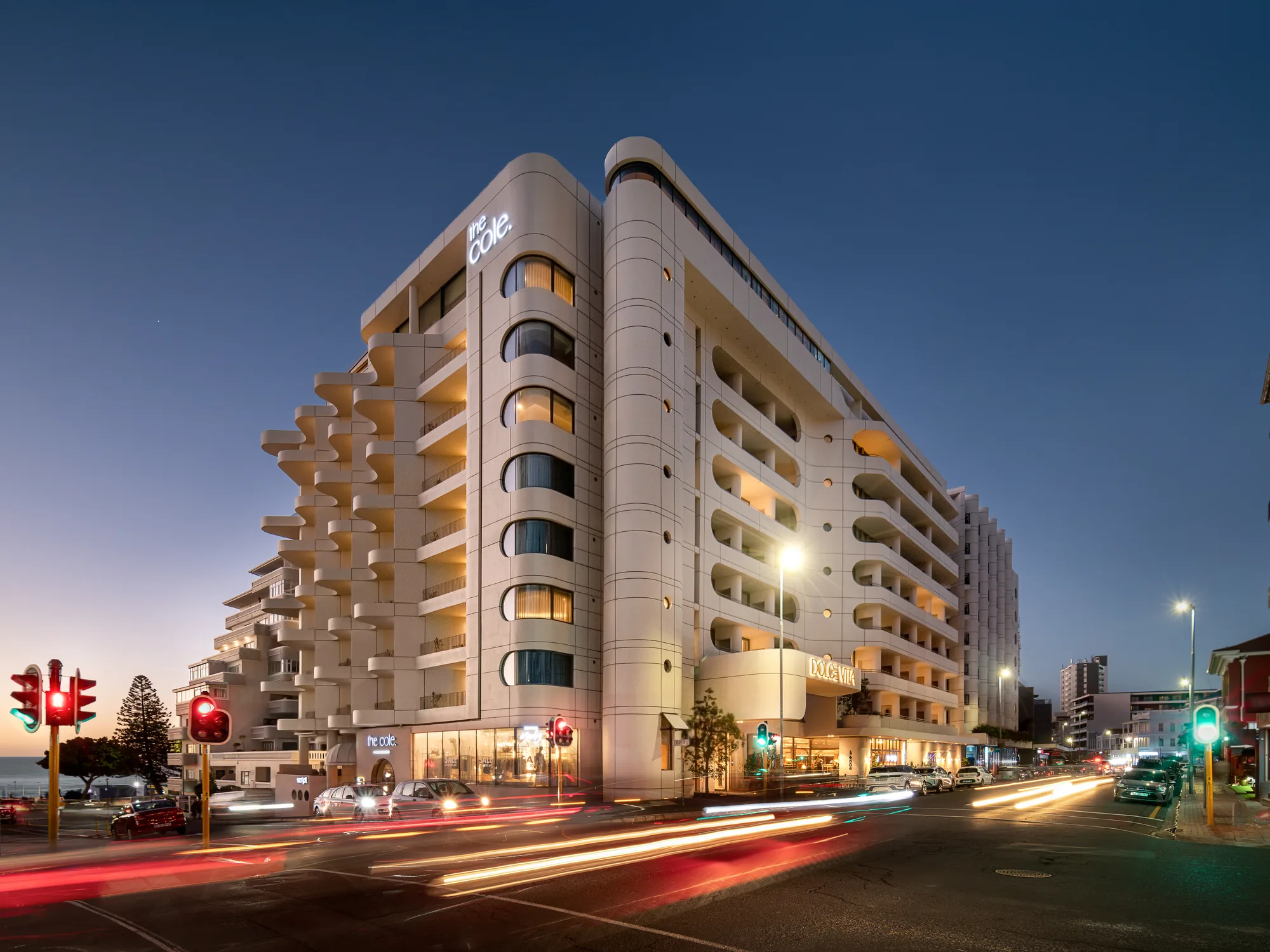
In Part 2 of our conversation with Robert Silke, the architect behind The Point, Dolce Vita and Mont Reve turns to the suburb he was born in. He explains how a shopping mall emptied Sea Point's high street in the 1990s, why other developers laughed at our rebuild of the old Galleria, and why he believes new buildings are what keep Sea Point property, and Cape Town property more widely, affordable. Missed Part 1? Read How Cape Town Saved Its City Centre.
In this episode
Robert Silke was born in Sea Point, at Somerset Hospital, and remembers the suburb of the mid-1980s as a kind of Manhattan. Main Road was a long, linear strip of delicatessens, pharmacies and boutiques that seemed to stay open all night. It was an exclusionary place, he is quick to add, as most of the country was at the time. But it was the jewel in the crown of the city, and it gleamed.
Then came the Waterfront. When Victoria Wharf opened in the early 1990s, it did what a large shopping centre does to a high street anywhere in the world. "It literally sucked the lifeblood out of Sea Point," he says. Restaurants closed and reopened at the Waterfront. By the end of the decade Main Road was in full urban decay, and by 2000 the suburb was in trouble.
We had been reinvesting in Sea Point since the early 2000s, and around 2010 we bought the old Checkers Galleria with Hosken Consolidated Investments. Robert, who met Paul and Saul at about that time and worked on what became The Point, remembers what was there: a busy Checkers downstairs and, up the escalators, what felt like an abandoned mall. The purchase was expensive and, he recalls, controversial. Paul's view was that the centre could become the generator for the whole area. "Just as a mall had killed Sea Point in 1992," Robert says, "a mall in 2010, 20 years later, could be what saves Sea Point."
The spending did not stop at the purchase. "I would bump into other property developers who would laugh and scoff at how much the Berman brothers were splurging on Sea Point," he says. In 2010, Regent Road was the worst stretch of the main road, and here was a developer cladding a building in glass, aluminium, granite and marble. Today, Robert says, Regent Road is the best part of it. It is also where we have since built Mont Reve.
He is clear it was not charity. "No property developer does things for free," he says. His reading is that we were setting up our future in the area. Fix the high street, accept that the first building may not pay off quickly, and you earn the chance to spend the next decades building apartments and hotels along it. That, he points out, is what happened.
It is also how he tells a building that belongs from one that doesn't. An extractive development finds a demand, spends the minimum and takes the maximum: a shed with a supermarket in it, or a stack of identical boxes to live in. "An extractive building that's there for purely financial purposes looks like an alien that's arrived to harvest the humans," he says. "It will look alien because it is conceptually alien."
"They didn't grow up rich in the area. They grew up poor in the area."
The alternative, he says, comes from developers who live and breathe the place. Paul and Saul grew up in Sea Point, and not wealthy, so what drives them is "a nostalgia for when the place was functioning." Robert shares it. He has absorbed the suburb's architecture all his life, from its apartment blocks to a seafront he rates among the best designed in the world, and it finds its way into his work. The Point, he notes, carries details you can find on the block of flats across the road.
The same thinking shows in apartment sizes. Sea Point's high street has more developers than ever, and much of what has gone up is short-term: thousands of micro-studios, with one firm of architects, Robert says, boasting of a 12 square metre unit. "BBG certainly is not in that race to the bottom," he says. In the work he has done with us, the apartments are getting larger, and they are built to be lived in, including by families.
Robert takes the opposite view to most. Cape Town's residential property prices rose by about 10 percent, and many people blame new developments. He argues they have cause and effect backwards. Without the new blocks of flats of the last ten to 20 years, he believes that figure could have been 25 or even 50 percent, and developers only build because prices rise in the first place. He borrows the idea from a former head of UCT's affordable housing unit, who points out that nobody ever builds C-grade office space. New buildings are always A-grade, and they become affordable with age. By Robert's account, South African cities remain among the cheapest places in the world to buy property. "If we stopped making the flats, we'd have a crisis," he says. "We'd have an affordability crisis."
Robert, who was on the design team for the 2010 stadium, calls Green Point the new frontier. The state invested heavily there around the World Cup: the stadium, Green Point Common turned from a windswept wasteland into an urban park, and new roads and sidewalks throughout. Yet little private development followed, because so little land is available. That is why he calls it "an absolute miracle" that Paul and Saul secured one of the last underused sites on the Green Point strip, now 108 Green Point, at a key intersection opposite the stadium and the Waterfront. From a few storeys up, he says, you see the park, the stadium, the golf course and the sea all at once. "It's difficult to imagine it's real."
It is the approach that has guided us for more than 30 years. Spend where it shows, invest in the street as well as the site, and stay long enough to see it pay off.
Missed Part 1? Read How Cape Town Saved Its City Centre, and follow The Inside Story on YouTube or Spotify for new episodes.
Related: Paul Berman on whether the Atlantic Seaboard property market is a bubble.
For where the Atlantic Seaboard market stands today, read Paul Berman's Q2 2026 read on property investment in Cape Town.