October 14, 2026

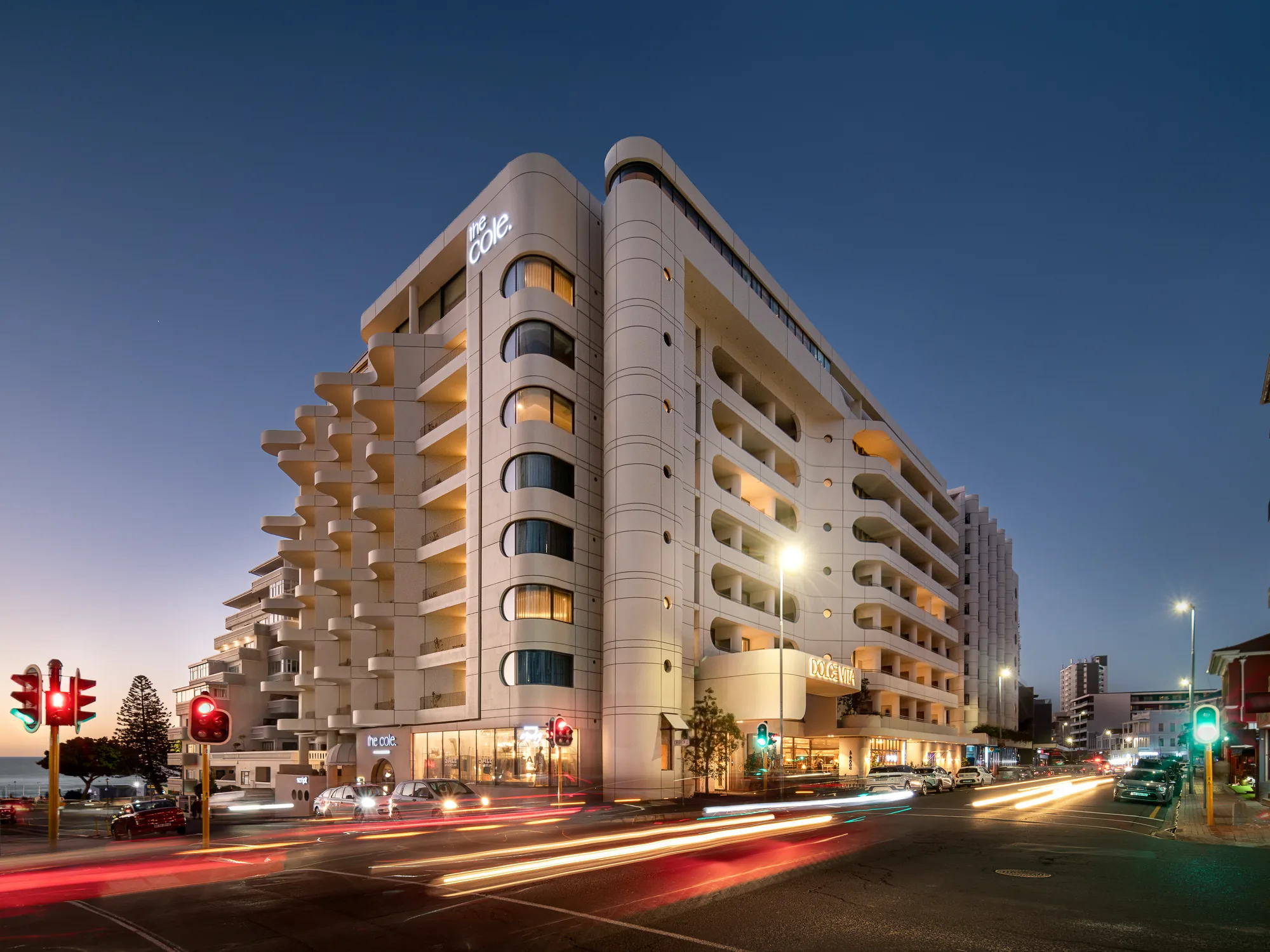
Robert Silke, who leads the Cape Town practice Robert Silke & Partners, is the architect behind some of the Atlantic Seaboard's best-known buildings, including three of ours: The Point, Dolce Vita and Mont Reve. Before founding the practice in 2015, he spent eighteen years at Louis Karol, rising to partner and head of design, and led the residential conversion of Old Mutual's former head office in the city centre. In Part 1 of this episode of The Inside Story, he talks about what an architect actually controls, why Cape Town's centre emptied out, and how it was brought back.
In this episode
Most architects leave university wanting to design churches, galleries, and grand houses. Robert Silke spent his career doing the opposite, and he will tell you the opposite is harder and matters more.
"You don't own the canvas when you're an architect," he says. "It's other people's money you're using." It sounds like a limitation. In practice it is a philosophy. A fine artist buys their own materials and answers to no one. An architect works inside a great deal of other people's investment, hundreds of people, and a long list of practical and financial requirements, and only once all of that is met is there a margin, five or ten percent, where real design can happen. The architects who make peace with that go on to build the city. The ones who do not, in his words, are often broken by the disappointment.
From his years at Louis Karol, he took a discipline worth repeating for anyone who commissions, builds, or buys: "If you want freedom of design, you first have to look after your client, and society, and your client's money." Protect the money first, and you would be surprised what you are then allowed to do.
The clearest test of that idea was a building nobody wanted.
Around 2002, Old Mutual announced it was leaving its head office in the centre of Cape Town, a monumental granite tower on Darling Street that had failed to find a buyer. Robert describes the Mutual Building as one of the most beautiful in the country, built in 1939 of solid granite rather than cladding, and, by his account, once the tallest building in Africa outside the pyramids. If a building like that could be mothballed, he thought, nothing could survive in the centre of town.
Cape Town's centre was emptying for a reason, and Robert traces it back further than most would. The city, he argues, had become an office district that filled at nine in the morning and emptied at five, dead and unsafe at night. The deeper cause, to his mind, was the demolition of District Six and the forced removals that ran into the 1980s, which stripped out the resident population who had actually kept the shops, restaurants, music halls, and theatres going every day. Suburban shoppers coming into town once a month could not replace them. By 1999 the centre had wound down to almost no one.
"The thing to do if you're going to save a city centre is you need to inject it with people."
His answer was people. Working with Louis Karol, who had the ear of Old Mutual in a way a young architect did not, Robert put together a scheme to carve the Mutual Building into apartments and give the company a dignified exit. It worked, and it helped turn the centre around. The lesson he took from it is the one that has governed his work since: carry a social idea in the back of your mind, put it through a commercial lens the client can see, and as long as the client does not lose money, it is remarkable what you are allowed to build.
It is the same discipline Robert has brought to The Point, Dolce Vita and Mont Reve, and the reason we have built with him three times.
Part 2, coming soon: Robert turns to Sea Point, the high street a mall emptied, and the rebuild other developers laughed at us for.
Follow The Inside Story on YouTube or Spotify to catch Part 2 when it is released.
Related: Paul Berman on whether the Atlantic Seaboard property market is a bubble.
For where the Atlantic Seaboard market stands today, read Paul Berman's Q2 2026 read on property investment on the Atlantic Seaboard.