September 22, 2026
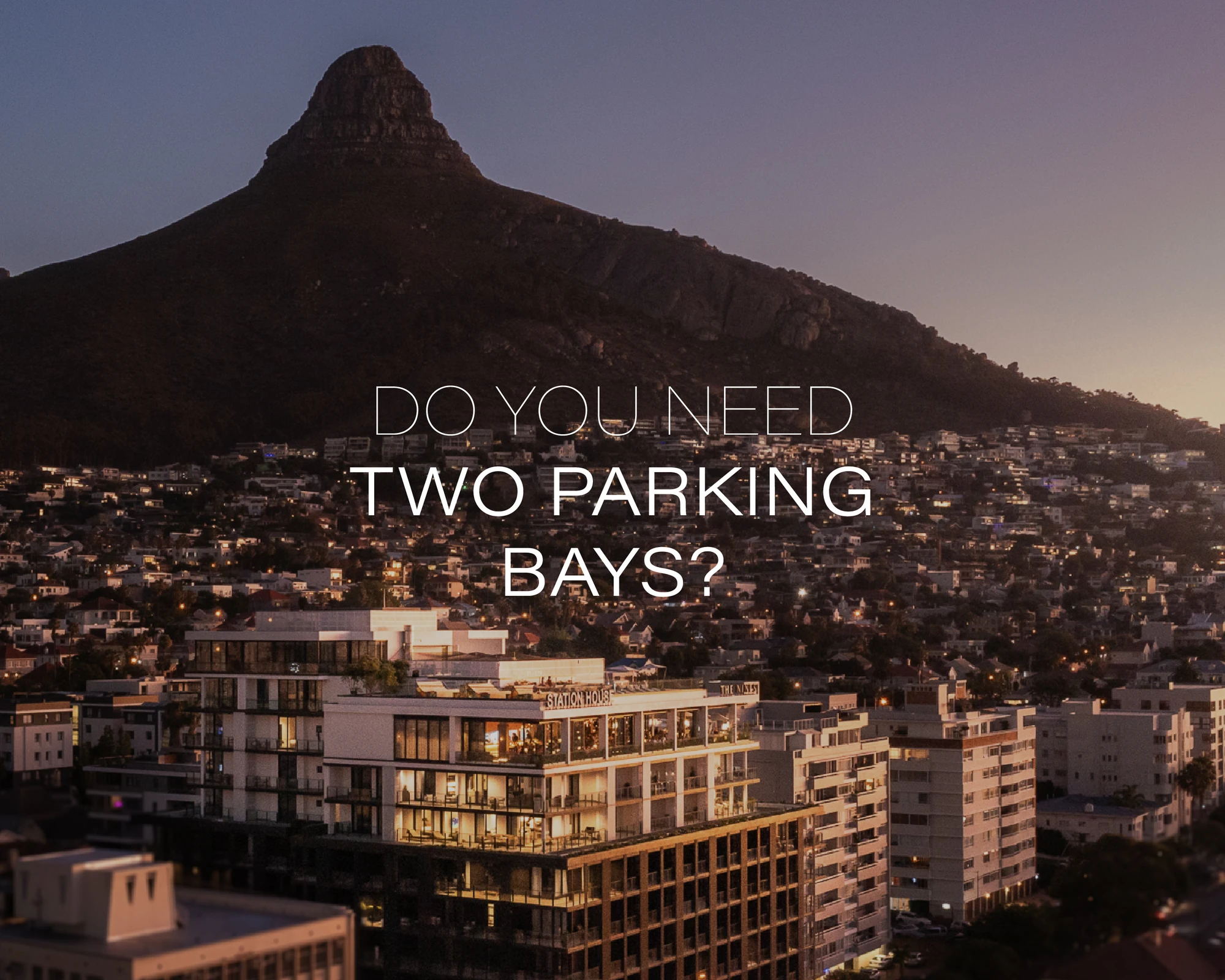
A second parking bay rarely decides a resale on the Atlantic Seaboard. Whether an apartment needs a bay at all depends on the apartment.
A studio does not necessarily need one. A short-stay investment does not need one either. A two- or three-bedroom apartment does, and for those units a bay adds real value to the price at resale. What the market does not require is two bays as a condition of selling. The myth takes a reasonable expectation for larger family apartments and applies it to every unit in the building.
The more useful question for a buyer is whether the apartment has the parking its likely next owner will expect, and whether more can be added later.
"But for resale, a parking bay does add value to the purchase price."
Parking behaves differently across the unit mix, and treating it as one rule is where buyers go wrong.
At the smaller end, the studio buyer is usually a young professional, a lock-up-and-go owner, or an investor. Many of them walk, cycle, or use ride-hailing in suburbs like Sea Point and Green Point, where the Promenade, the restaurants, and the CBD are close. For this buyer, a bay is useful but not essential.
"Typically, studios don't necessarily require a parking bay. I think it's a luxury."
The short-stay investor is in a similar position. A guest staying a week on the Atlantic Seaboard often arrives without a car, and the return on a short-stay unit depends far more on location, management, and the building's rules than on a bay in the basement. We covered those rules in the first episode of this series.
At the larger end, the calculation reverses. Two- and three-bedroom apartments are bought by couples, families, and owner-occupiers who live in the building full time. For them, a secure bay is part of what makes the apartment work day to day, and without one the pool of buyers at resale gets smaller. A 2025 Sea Point property guide made the same point from the market side, noting that secure bays lift both resale value and tenant demand in the suburb.
For larger apartments, one bay is the threshold. Two is a preference. In the Sea Point resale market, two-bedroom apartments trade with one bay and with two, and the difference in outcome comes from the apartment itself: its view, its position in the building, and the condition of the building it sits in, far more than from the second bay.
There is a planning reason this matters more today than it did a decade ago.
The City of Cape Town's development management scheme sets minimum off-street parking requirements for new developments. Over the past several years, the City has moved to reduce those minimums in areas well served by public transport, as part of a broader policy to reduce dependence on private cars and encourage transit-oriented development.
Sites inside the City's designated PT1 and PT2 areas automatically qualify for lower parking requirements. The policy intent is sound. In practice, it means a new building can be approved with fewer bays than its future residents will want.
Once the legal minimum is low, how much parking a building offers is a choice the developer makes, and buyers live with that choice for as long as they own the apartment. On the Atlantic Seaboard, where land is bounded by the mountain and the sea, as we set out in our Q2 2026 read, every bay built is a deliberate use of scarce space.
Every BBG development offers parking. Purchasers who want more than one bay can buy additional bays, whether they are buying one unit or several. In our mixed-use buildings, parking is also available to the public.
We plan parking this way because it is a daily concern in dense neighbourhoods, and because it lets the buyer make the decision Paul describes. A studio buyer who does not need a bay is not forced to pay for one. A family buying a three-bedroom apartment can secure what they need, and an investor buying several units can plan parking around each one. Visitors to the restaurants and shops at street level have somewhere to park that is not the kerb outside a resident's door.
Whatever building you are considering, four questions will tell you where you stand on parking.
First, how is the bay held? In a sectional title scheme, a bay can form part of your section, be a separate section with its own title, or be an exclusive use area allocated to your unit. Each affects how the bay transfers when you sell. Your conveyancer can confirm which applies.
Second, is it secure? A covered, access-controlled bay and an open bay in a shared lot are not the same asset, and the market prices them differently.
Third, is there visitor parking? For owner-occupiers in particular, the absence of visitor bays becomes a daily issue quickly.
Fourth, can you add a bay later? If your needs change, or the next buyer's needs differ from yours, the option to buy an additional bay protects the apartment's appeal.
Match the parking to the likely next buyer, not to a rule of thumb. A studio priced with a bay it does not need is priced above its natural market. A three-bedroom apartment without a bay has a smaller pool of buyers. Neither outcome is about the number two.
Paul's view is that the jury is still out on whether parking is essential to every purchase. It is not out on whether it matters for the right unit.
Berman Brothers Group has been developing on the Atlantic Seaboard for more than 30 years. Across that time, parking has moved from a standard feature of every apartment to a considered decision, shaped by city policy, by how people in these suburbs now move, and by what each type of buyer actually needs.
The myth asks whether an apartment has two bays. The better question is whether the building gives each owner the parking their apartment requires, and the flexibility to change it.
____________________________
Paul Berman is a co-founder of Berman Brothers Group, which has been developing on the Atlantic Seaboard for more than 30 years. Myth vs Fact is BBG's monthly series cutting through the assumptions buyers most often bring to the Atlantic Seaboard market. For the full Q2 2026 market read, see the Boardroom Quarterly Executive Brief.
Continue reading: Myth vs Fact: Is Airbnb Always Allowed in Buildings? covers the rules that shape short-stay returns, the other side of Paul's point on studios and short-stay investments.